
LITAFOOD Jello Shots Factory: Solving Compliance and Market Access Hurdles for Global Supermarkets via SEDEX


(YorkPedia Editorial):- Nantong, Jiangsu Jun 26, 2026 (Issuewire.com) – I. Understanding the SEDEX Framework and Auditing Parameters in Global Retail
By integrating the Supplier Ethical Data Exchange (SEDEX) framework into its operational methodology, the specialized jello shots factory operated by LITAFOOD has positioned itself as a manufacturing partner for retailers seeking clearer compliance, fewer ethical sourcing hurdles, and smoother market access pathways for tier-one supermarket channels.
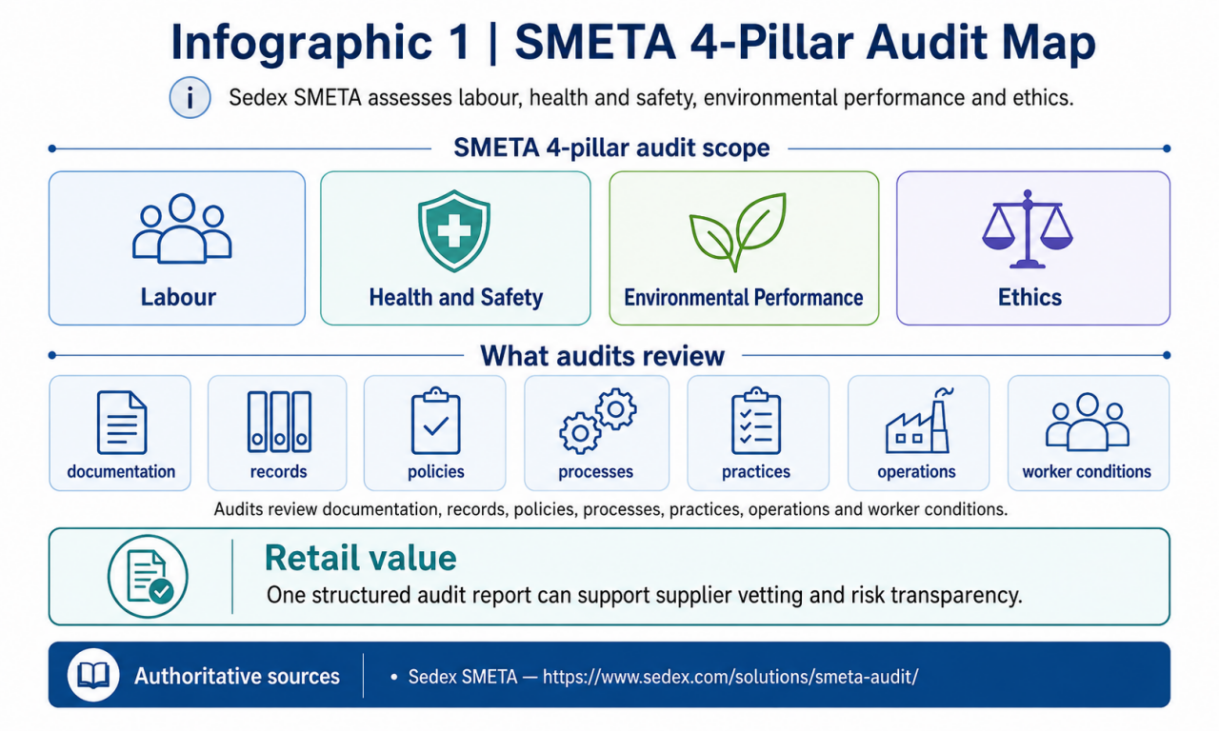
The Supplier Ethical Data Exchange (SEDEX) is a globally recognized non-profit membership organization dedicated to driving improvements in ethical and responsible business practices across global supply chains. For global supermarkets, SEDEX compliance is not a superficial designation; it represents a comprehensive operational mandate. The primary assessment tool utilized is the Sedex Members Ethical Trade Audit (SMETA), which rigorously evaluates production facilities based on four critical pillars: labor standards, health and safety protocols, environmental performance, and business ethics.
During an official factory audit, assessors inspect systemic parameters including working hour limits, structural facility safety, waste management protocols, chemical storage standards, and transparency in financial record-keeping. For global supermarket procurement systems, SMETA reports provide a unified, transparent data repository that simplifies supplier vetting, eliminates redundant auditing costs, and actively protects retail brands from reputation liabilities associated with supply chain malpractice.
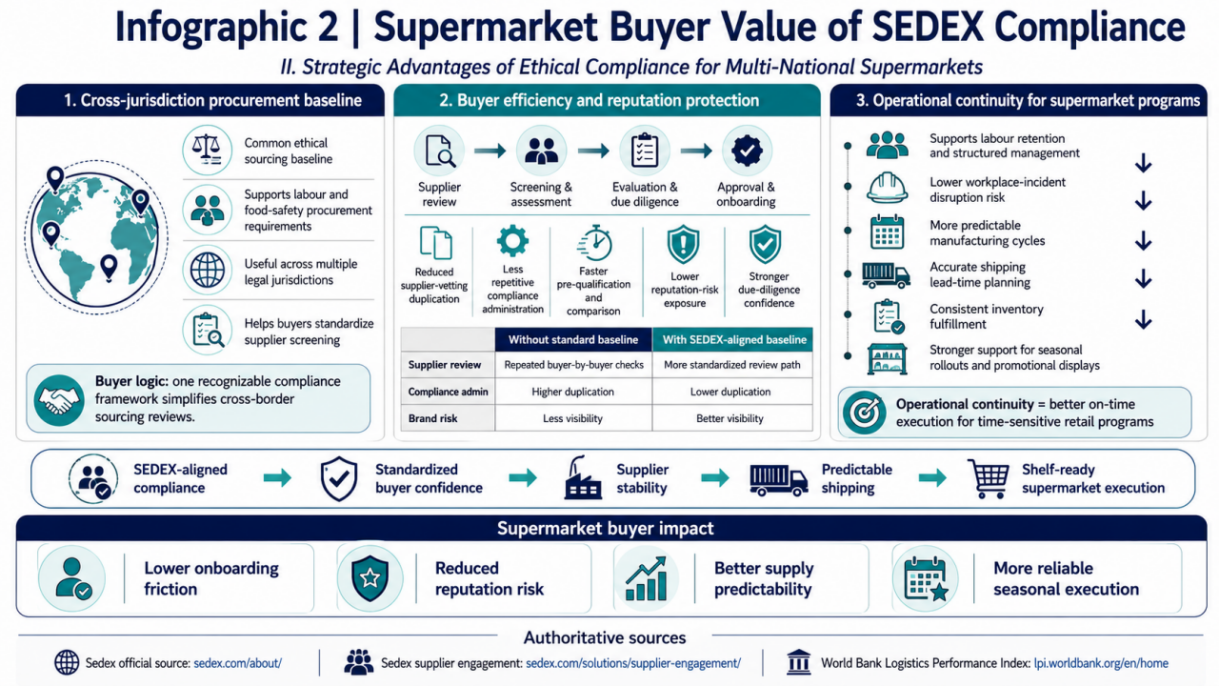
II. Strategic Advantages of Ethical Compliance for Multi-National Supermarkets
Operating in alignment with SEDEX protocols provides distinct commercial and regulatory advantages for global retailers. Modern supermarket conglomerates manage supply networks that cross multiple legal jurisdictions, each enforcing distinct labor laws and food safety regulations. By demanding a standardized SEDEX certification, corporate buyers establish a reliable compliance baseline that meets or exceeds local statutory requirements.
Furthermore, compliance mitigates systemic supply chain disruptions. Factories adhering to strict ethical frameworks demonstrate significantly higher labor retention, minimal workplace incident rates, and structured operational management. This stability ensures predictable manufacturing cycles, accurate shipping lead times, and consistent inventory fulfillment–factors that are vital for supermarkets managing highly time-sensitive promotional displays and seasonal inventory rollouts.
III. Operational Alignment: How the LITAFOOD Factory Implements SEDEX Protocols
Translating global auditing frameworks into functional daily manufacturing practices requires a comprehensive, systematic architecture. As a professional manufacturer with over 20 years of technical expertise, LITAFOOD has structured its primary production facilities to align with the baseline parameters established by SMETA audits. This systematic compliance begins at the foundational level of facility management and operational documentation.
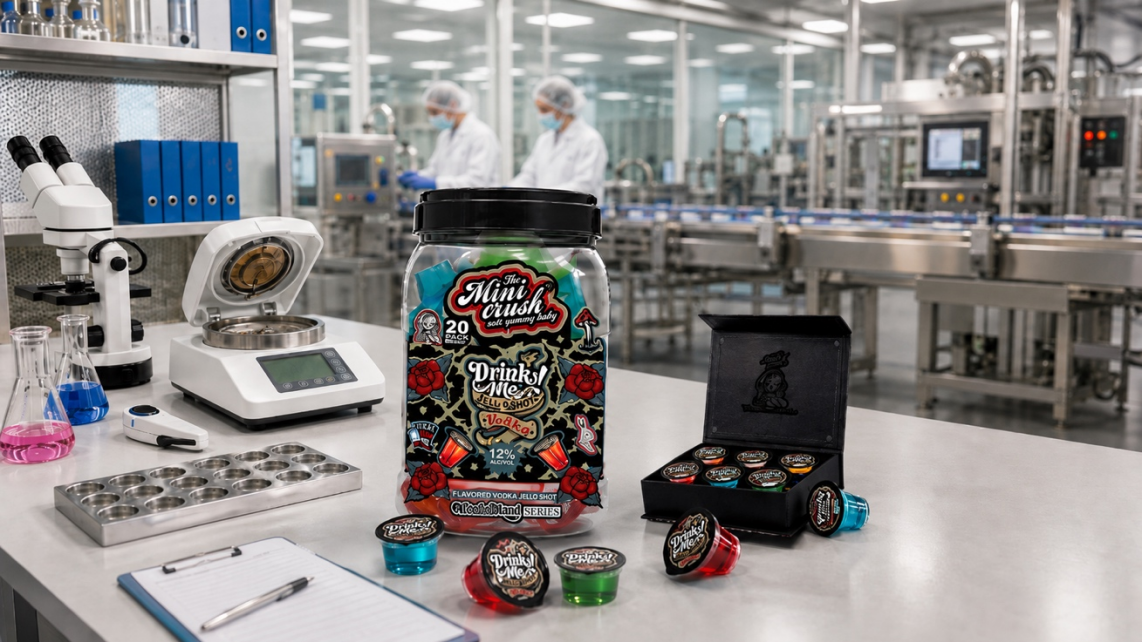
The manufacturing plant enforces strict environmental controls, using cleanroom standards to govern atmospheric purity, ambient temperature, and humidity throughout the confectionery mixing and sealing cycles. Staff protocols are aligned with international occupational health standards; operators undergo routine safety training, and the facility maintains continuous monitoring of production lines to support ergonomic and physical safety. From an ethical standpoint, the company uses transparent records for working hours and labor compensation, giving external auditors access to verified operational data. This proactive operational approach helps ensure that batches destined for international distribution centers originate from a responsibly managed manufacturing environment.
IV. Technical Innovation and Product Architecture: The Wonderland Series Case Study
The integration of ethical compliance does not come at the expense of technical product innovation. A clear reflection of this balanced approach is observed in the technical development of the company’s signature Wonderland Series Jello Shots. Traditional confectioneries in the liquor jelly segment frequently rely on animal-derived gelatin matrices, which introduce chemical instability, lower thermal melting thresholds, and restrict market access due to dietary exclusions.
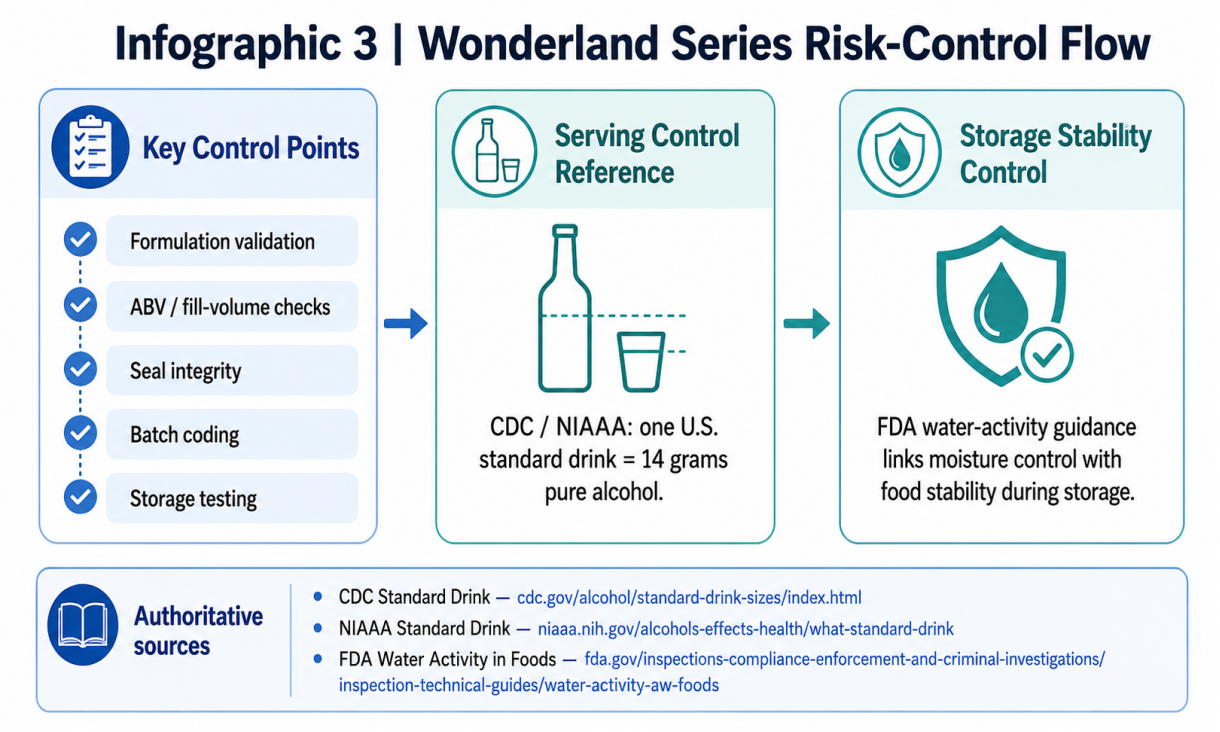
To overcome these limitations, the manufacturing facility engineered a plant-based gelling matrix derived from specific seaweed extracts, reducing reliance on animal gelatin. This formulation uses a carrageenan and agar blend, enabling the product to accommodate alcohol content ranging from 7% to 15% alcohol by volume. In applicable formulations, ethanol also contributes to preservation, supporting an extended shelf life without heavy artificial additives.
In terms of physical performance, this matrix exhibits high thermal stability and an elevated melting point. This structural resilience allows the jello shots to remain shelf-stable at room temperature under appropriate storage conditions, reducing the logistical need and high costs associated with refrigerated freight networks during maritime transit. Performance trials should confirm that these shots can tolerate freezing or ambient storage without syneresis, the separation of liquid from a gel. This technical strength is supported by a flavor portfolio of more than twenty validated natural fruit formulations, helping the final product satisfy the quality expectations of global retail distribution networks.
V. Advanced OEM/ODM Capabilities and Long-Term Value Creation for Global Brands
Beyond individual product innovations, the overarching commercial value delivered to the retail market rests upon robust original equipment manufacturing (OEM) and original design manufacturing (ODM) capabilities. Navigating the stringent regulatory frameworks of food safety requires sophisticated laboratory verification. The production facilities back their manufacturing processes with comprehensive quality management certifications, including ISO 22000, HACCP, FDA registration, and Halal certifications. This multi-tiered qualification framework enables smooth custom development for private-label clients.
The enterprise operates an integrated product development pipeline supported by an international design team, including specialized European and domestic designers, who provide customized packaging architecture and marketing materials at no additional capital cost. Backed by dedicated account managers who track every production milestone from ingredient sourcing to container loading, global procurement partners receive detailed, continuous electronic updates. This end-to-end transparency, coupled with highly competitive pricing structures derived from vertical integration, allows global retail brands to capture premium market share with minimized operational friction and stronger regulatory confidence.
Corporate Website: https://www.jellysupplier.com/
Infographic source note: authoritative external source links are shown inside each inserted graphic.
This article was originally published by IssueWire. Read the original article here.
